Can One Molecule Cover Both Ends of an HAE Attack?
Pharvaris's deucrictibant targets the bradykinin B2 receptor itself, with an on-demand capsule and a once-daily prophylaxis tablet. CHAPTER-3 showed an 83% attack-rate reduction, but the pivotal trial enrolled only 85 patients, and the 2027 FDA decisions will test both halves.

Pharvaris has spent the last few years building something HAE patients have not had before: one molecule, deucrictibant, aimed at both ends of an attack. The immediate-release capsule treats the attack as it happens; the extended-release tablet, dosed once daily, is meant to prevent attacks from starting. Both are small-molecule antagonists of the same target, the bradykinin B2 receptor. This weekend, while detailed CHAPTER-3 prophylaxis data are being presented at the ACAAI meeting in Phoenix, the more consequential dates sit ahead: a PDUFA decision on the oral on-demand capsule on April 23, 2027, and a planned first-half 2027 filing of the prophylaxis NDA.
Downstream of the pathway everyone else works upstream
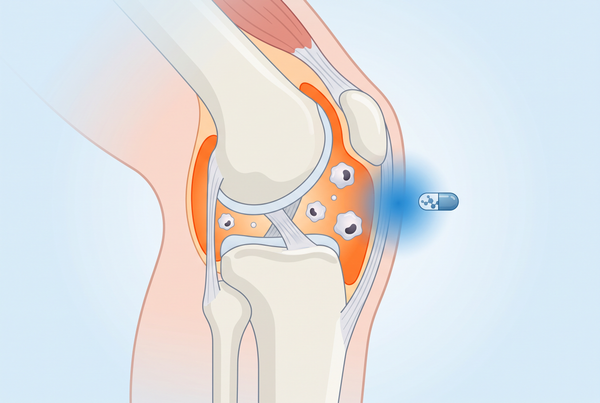
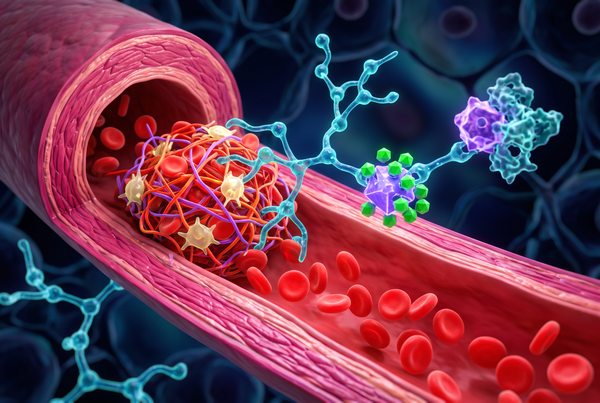
The bradykinin story gives deucrictibant a specific kind of positioning. Most modern HAE drugs work on plasma kallikrein, the enzyme that cleaves kininogen and liberates bradykinin, the vasoactive peptide that drives attack swelling. Deucrictibant does not touch the enzyme. It sits at the receptor itself, one step downstream, blocking bradykinin wherever it binds. That distinction matters clinically only if receptor blockade matches or beats enzyme inhibition.
The precedent is worth naming. Orladeyo (berotralstat, BioCryst) became the first oral, once-daily prophylactic for HAE with its approval on December 3, 2020, and it is a plasma kallikrein inhibitor. On the injectable side, Takhzyro (lanadelumab, Shire) has anchored prophylaxis since its own approval on August 23, 2018. Pharvaris's pitch to prescribers is therefore narrow and testable: efficacy that looks injectable-like, delivered in a tablet that also covers attacks. The RAPIDe-3 on-demand data, published in The Lancet, support the treatment half, with a median time to symptom relief of 1.28 hours versus placebo (p<0.0001) and most attacks adequately controlled with a single capsule.
What CHAPTER-3 actually showed
CHAPTER-3 (NCT06669754) is a global Phase 3, double-blind, placebo-controlled trial of deucrictibant XR 40 mg once daily, with 85 participants randomized 2:1 (55 drug, 30 placebo) from 21 countries and 24 weeks of treatment. It enrolled all three HAE types, including type 1, type 2, and HAE with normal C1 inhibitor, which the company describes as the first and only prophylaxis Phase 3 study to cover all three. That breadth matters for labeling, because HAE with normal C1 inhibitor is the hardest form to classify and is often excluded from pivotal work.
The headline efficacy is an 83% reduction in mean monthly attack rate versus placebo (p<0.0001), rising to 87% in the 80 participants with HAE type 1 or 2. Protection began within the first week and held through 24 weeks, and all secondary efficacy endpoints met statistical significance. Safety was unremarkable on its face: most treatment-emergent adverse events were mild or moderate, there were no treatment-related serious adverse events, and one participant in each group discontinued due to an adverse event.
The small-N problem, and the spend behind it
The trade-off is statistical. Eighty-five participants, 30 of them on placebo, is a small pivotal dataset by any standard, and a single large trial with no replication leaves the regulator weighing one dataset against a large effect size. The approval calculus likely favors the drug given the magnitude and consistency of the reductions, but the labeling and post-market expectations that follow a small trial are rarely as clean as the topline.
The financial posture shows a company spending into a launch. Q3 2026 results show cash and equivalents of EUR 283 million at September 30 (down from EUR 292 million at year-end 2025), R&D expense of EUR 32.4 million for the quarter, and G&A that nearly doubled to EUR 17.7 million from EUR 9.8 million a year earlier, against a quarterly loss of EUR 47.4 million. The pipeline widens beyond HAE: CREAATE (NCT07266805), a Phase 3 in acquired angioedema due to C1 inhibitor deficiency with 24 participants randomized in part 1, reports topline in Q1 2027, and the EMA is formally reviewing the on-demand application. CHAPTER-4 (NCT06679881), the open-label extension, continues to build long-term XR exposure. Deucrictibant also carries US, European, and Swiss orphan drug designation for bradykinin-mediated angioedema.
What 2027 will test
The FDA decision on April 23, 2027, will answer whether an oral on-demand capsule can enter a space where guidelines already have workable options, and the XR filing in the first half of 2027 will test whether a single pivotal trial of this size supports prophylaxis approval against an Orladeyo incumbent and injectable standards. If both land, one molecule would cover attack and prevention in an all-oral regimen. If either falls short, the two-sided franchise becomes a one-sided bet with launch costs already committed.