FDA Backs a Second CSF-1R Drug, This Time Without the Boxed Warning
FDA approved pimicotinib for tenosynovial giant cell tumor with a 56% response rate and no boxed warning, seven years after pexidartinib's liver-risk label stalled the field.
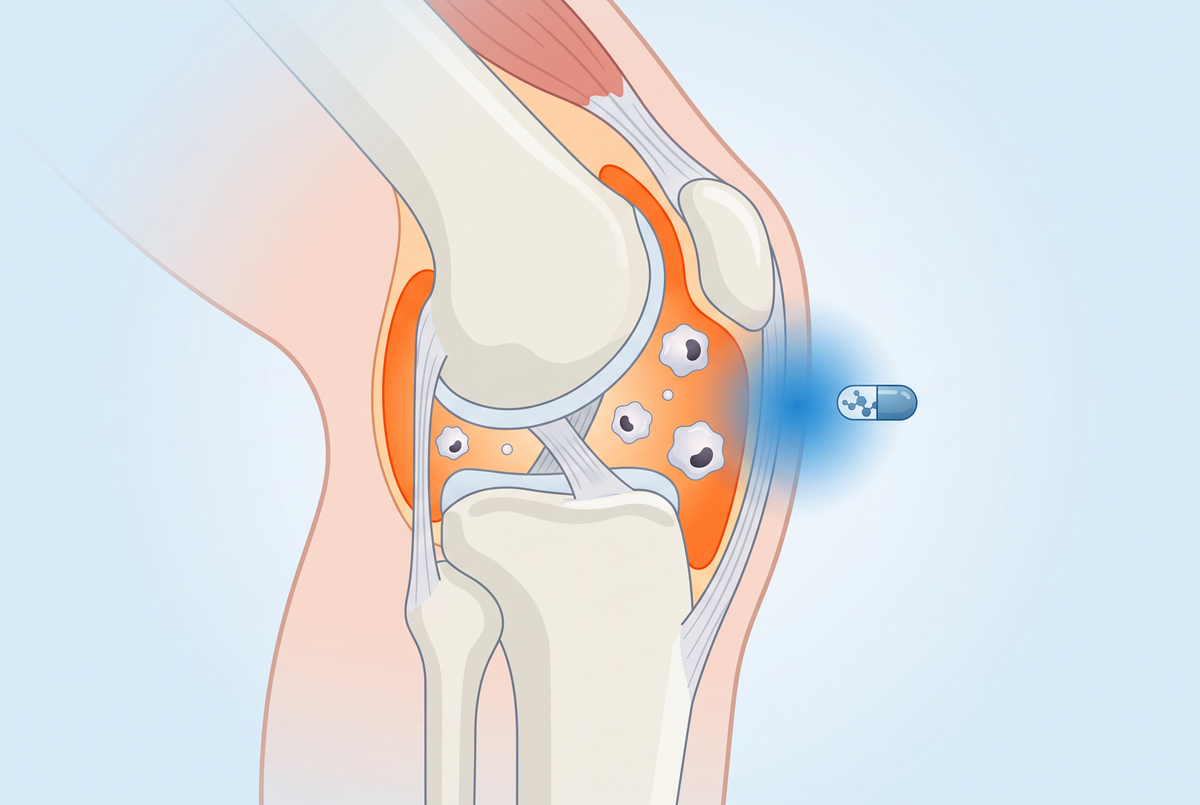
Patients with tenosynovial giant cell tumor have spent seven years in an uncomfortable position: a disease that slowly wrecks their joints while young and otherwise healthy, a surgery-first standard that can require repeat resections, and the only approved drug carrying a boxed warning for potentially fatal liver injury. On November 10, 2026, the FDA approved pimicotinib (Pimjetmi), a kinase inhibitor from EMD Serono and Merck KGaA, for adults with symptomatic TGCT for which surgical resection may cause worsening functional limitation or severe morbidity.
The MANEUVER Data
The approval rests on the Phase 3 MANEUVER trial, a double-blind, placebo-controlled international study that randomized 94 patients in a 2:1 ratio. Sixty-three patients received 50 mg of pimicotinib once daily; 31 received placebo. The primary endpoint, objective response rate per RECIST v1.1 by blinded independent central review at Week 25, came in at 56% (95% CI 42-68) versus 3.2% (95% CI 0.1-17) for placebo, with a p-value below 0.0001.
Durability held up. Median duration of response was not reached, but among responders, 91% had responses lasting at least six months and 77% at least 12 months. Functional outcomes moved too: statistically significant gains in relative range of motion (p=0.0003), physical functioning on the PROMIS scale (p=0.0074), and pain on the Brief Pain Inventory (p<0.0001). For a population where the disease itself, not a treatment, tends to be the driver of lost mobility, those secondary endpoints matter as much as the tumor shrinkage numbers.
The Shadow of Pexidartinib
The comparison that will drive prescribing behavior is not pimicotinib versus placebo. It is pimicotinib versus Turalio (pexidartinib, Daiichi Sankyo), the first drug approved for TGCT in August 2019. Pexidartinib delivered an ORR of 38% versus 0% in its 120-patient trial, a genuine efficacy signal. But its label carries a boxed warning for serious and potentially fatal liver injury, and the drug is available only through a REMS program. That combination weighed on adoption and left the field effectively stalled for seven years.
The pimicotinib approval summary lists hepatotoxicity among warnings and precautions, and does not include a boxed warning or a REMS program. That is an observable label difference, not a safety guarantee. Liver enzyme increases are common: monitoring is required before starting treatment, monthly for the first three months, then every three months through the first year. EMD Serono stated there was no evidence of cholestatic hepatotoxicity or hair and skin hypopigmentation in the trial, and discontinuation for treatment-emergent adverse events occurred in only 1 patient (1.6%), with dose reductions in 7.9%. Still, the common adverse reactions, led by pruritus, rash, face and periorbital edema, fatigue, nausea, headache, and peripheral edema, along with lab abnormalities including increased CPK, LDH, AST, lipase, cholesterol, amylase, and ALT, mean clinicians will be managing tolerability, not merely writing scripts.
How the Drug Got Here
The path to this approval is its own story. Pimicotinib was developed by Abbisko Therapeutics, a Shanghai-based company, with Merck KGaA holding worldwide commercialization rights. The FDA review ran under Project Orbis alongside regulators in Australia, Canada, Israel, Switzerland, and the UK, with EMA as an official observer. Prior approvals came from China's NMPA in December 2025, Health Canada in June 2026, and Swissmedic in October 2026. A China-discovered asset licensed to a European major reaching the US through coordinated international review is a template that did not exist a decade ago.
What It Means for Patients
TGCT is rare and locally aggressive, arising in the synovium and tendon sheaths around joints. It is rarely malignant, but untreated or recurrent disease can cause cumulative and irreversible joint damage in a typically young population. Surgery remains the primary treatment, yet tumors can recur after resection, and some patients are not surgical candidates. EMD Serono's release cites estimates that up to half of TGCT patients are initially misdiagnosed, which stretches the diagnostic odyssey further.
The open question is whether the 56% versus 38% ORR gap represents real clinical superiority; the trials were run years apart with different populations, so it is a cross-trial comparison, not a head-to-head. But with a workable label, the class finally has a second option that clinicians can reach for before another resection. That alone changes the conversation for patients facing joint damage.