Beam's Base Editor Just Cleared Its First Pivotal Test. Now Comes the Harder One.
Ristoglogene autogetemcel met its primary endpoint in the BEACON Phase 1/2 trial, putting Beam on track for a first-of-its-kind base editing BLA. But it arrives third in a market where two approved therapies have struggled to gain traction.
Beam Therapeutics announced that ristoglogene autogetemcel, the company's one-time autologous base-edited cell therapy for sickle cell disease, met its primary efficacy endpoint in the prespecified interim analysis of the BEACON Phase 1/2 trial. The endpoint, freedom from severe vaso-occlusive crises for at least 12 consecutive months, was assessed on independently adjudicated results. All primary safety endpoints and all secondary endpoints were met, including 12-month freedom from inpatient hospitalization for severe crises.
The result sets up a regulatory filing Beam plans as early as year-end 2026, which the company describes as potentially the first BLA for a base editing therapy. Beam did not disclose how many of the patients followed to the endpoint actually achieved the 12-month freedom from crises, a gap that will matter until detailed data arrive. As of the October 20, 2026 cutoff, 39 adults and 10 adolescents had been dosed, with 31 patients having completed the follow-up the endpoint requires. A fuller data cut is slated for a medical meeting in 2027, and an earlier analysis will be presented orally at the American Society of Hematology annual meeting in New Orleans this December.
What base editing actually changes
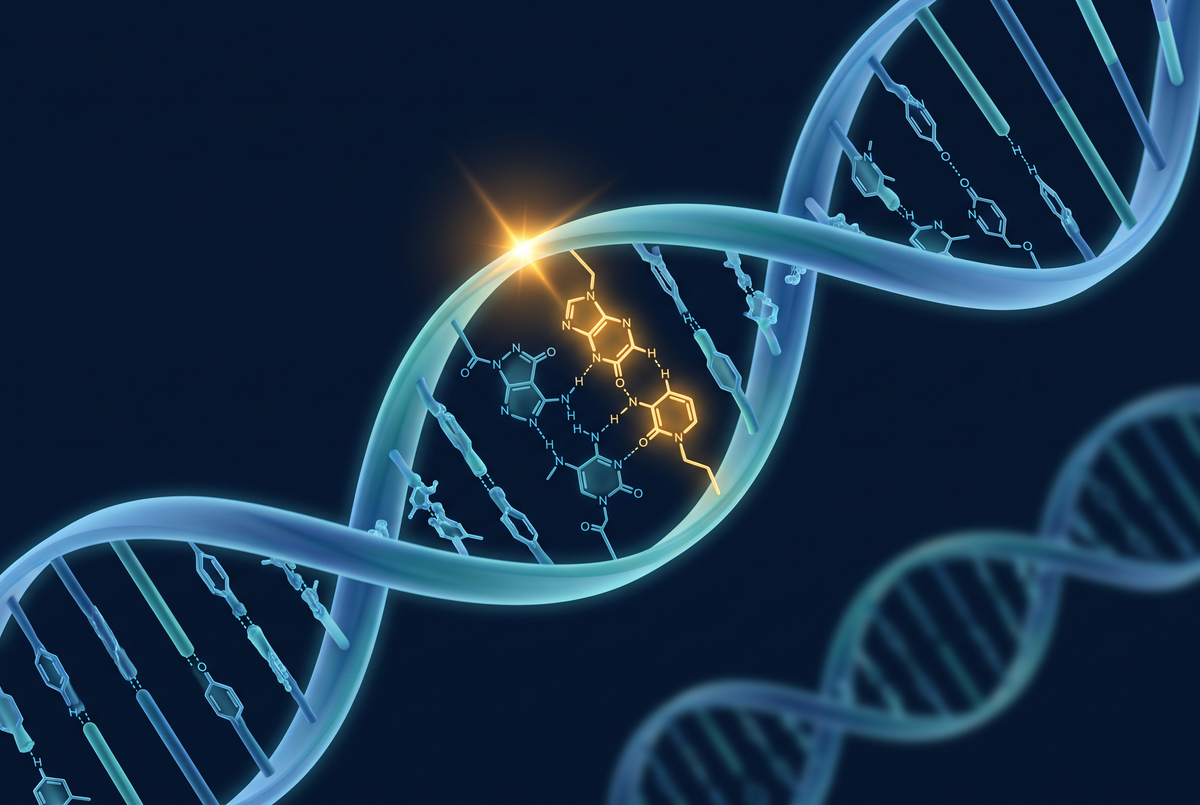
Risto-cel is built on a mechanistic distinction that is more than marketing. The therapy takes a patient's own CD34+ blood stem cells and base-edits the promoter regions of the HBG1 and HBG2 genes, blocking the transcriptional repressor BCL11A from binding there. The edit raises fetal hemoglobin, the non-sickling form that carries oxygen before birth, mimicking the benign genetic condition known as hereditary persistence of fetal hemoglobin.
The real distinction sits in the editing chemistry itself. Base editing rewrites single DNA letters without cutting both strands of the double helix, unlike older CRISPR nuclease approaches that rely on double-strand breaks. Whether that translates into a meaningful safety edge in practice is something regulators and clinicians will weigh on the full dataset rather than the topline, but for a field where long-term safety scrutiny is intense, the cleaner mechanism is not a small talking point.
Arriving third in a thin market
The harder test is commercial, and it has already been running for two years. Two genetic therapies for sickle cell disease are approved in the United States, both cleared in December 2023: Casgevy, the CRISPR-based therapy from Vertex Pharmaceuticals and CRISPR Therapeutics, and Lyfgenia from Genetix Biotherapeutics. Neither has had an easy launch. Only five patients received Casgevy in the second half of 2024, though Vertex has since reported an upswing, with 64 patients treated in 2025, $116 million in total Casgevy revenue that year, and $219 million in sales through the first nine months of 2026. Genetix, for its part, sold itself after struggling to market Lyfgenia.
Beam's read on why uptake has lagged is instructive. Management told RBC Capital Markets analysts in September that adoption has been limited by supply constraints rather than demand or reimbursement, and argued risto-cel should stand out on manufacturing, with a shorter process and fewer mobilization cycles for patients before treatment.
That argument has a real logical core. These therapies require stem cell mobilization, collection, weeks of manufacturing, myeloablative conditioning, and inpatient recovery. If Beam can compress that timeline, it attacks a real friction point in an experience patients and treatment centers have described as grueling. A demand-limited market would be a different problem; a supply-limited one is at least theoretically addressable.
But supply-limited is also the convenient framing for a company third in line, and Beam still has to show its manufacturing advantage converts into throughput at the treatment centers that have been the choke point. Sickle cell disease affects an estimated 100,000 people in the United States and roughly 8 million worldwide, yet two approved products have yet to move this class beyond dozens of patients per year at scale.
The path from here
The scientific milestone is real. A pivotal readout clearing on both efficacy and safety endpoints, in a trial with independent adjudication, puts risto-cel on track to become the first base-editing therapy filed with the FDA. The BEACON topline also gives Beam a regulatory story to carry through the filing window while the ASH presentation in December fills in some of the texture the press release withheld.
The open questions are the ones the topline cannot answer: the actual proportion of patients achieving the endpoint, the durability of the response, and whether a third entrant can position itself as the operationally easier choice. Beam has the cleaner mechanism and, it argues, the faster factory. The next year will show whether either is enough to move a market that has humbled better-timed entrants.