Mast Cell Mastery: Why Barzolvolimab's Phase 3 Wins Could Rewrite the Chronic Hives Playbook
Celldex's barzolvolimab met all primary and secondary endpoints in Phase 3 CSU trials, demonstrating complete responses in 42-46% of patients at Week 12 and 45-54% by Week 24—establishing mast cell depletion as a genuine advance in chronic spontaneous urticaria treatment.


On September 22, 2026, Celldex Therapeutics announced that its drug candidate barzolvolimab had met the primary and all key secondary endpoints in both the EMBARQ-CSU1 and EMBARQ-CSU2 Phase 3 trials in chronic spontaneous urticaria. The trials enrolled 1,939 patients, making them the largest program ever conducted in antihistamine-refractory CSU. The results were striking across every measure the studies tracked. And yet, Celldex's stock fell on the news.
That market reaction is worth sitting with for a moment, because it reveals something about how investors have been reading this company's story. Two months ago, barzolvolimab failed its Phase 2 trial in prurigo nodularis, missing the primary endpoint despite what Celldex described as profound systemic mast cell depletion. The failure raised a question that the CSU data now answer with considerable force: was the mechanism sound, or was the drug simply not working? The EMBARQ results make the answer clear. The mechanism is sound. The drug works. The prurigo nodularis failure was an indication-specific problem, not a platform problem.
What Barzolvolimab Actually Does
To understand why these results matter, it helps to understand what barzolvolimab is and what it does. It is a humanized monoclonal antibody that binds to the KIT receptor, a receptor tyrosine kinase that is abundantly expressed on mast cells and critical for their function and survival. By inhibiting KIT, barzolvolimab does not merely suppress mast cell activity. It depletes mast cells systemically. That is a fundamentally different approach from every other therapy currently available or in late-stage development for CSU.
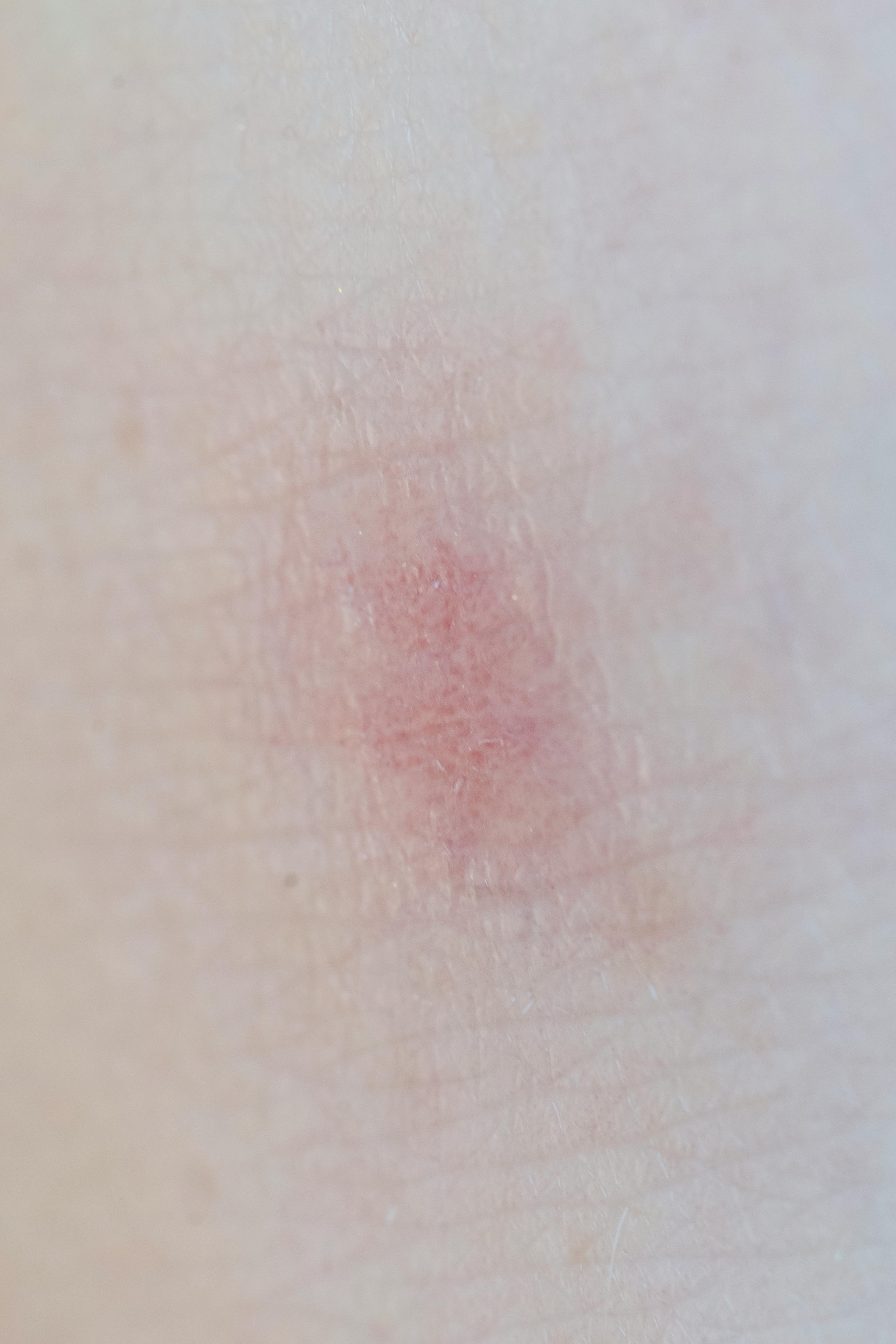
Chronic spontaneous urticaria is a disease driven by mast cell activation. The cells release histamine and other inflammatory mediators in response to triggers that are often unknown, producing the spontaneous hives, unbearable itch, and unpredictable angioedema that define the condition. Current therapies work downstream of the mast cell: antihistamines block histamine receptors, and omalizumab (Xolair) intercepts the IgE antibodies that activate mast cells. Neither approach eliminates the mast cells themselves. Barzolvolimab does, and the clinical data suggest that going to the root of the problem produces results that downstream approaches cannot match.
What the EMBARQ Data Show
The primary endpoint in both trials was the mean change from baseline in the weekly urticaria activity score at Week 12. Patients receiving either dose of barzolvolimab showed reductions of approximately 20 points from a baseline of around 30, compared to reductions of roughly 11 points in the placebo groups. The p-values were less than 0.00001 across all four comparisons. That level of statistical significance in a double-blind, placebo-controlled trial of nearly 2,000 patients is not a marginal result. It is a definitive one.
The complete response data are the most clinically meaningful numbers in the dataset. At Week 12, between 42 and 46 percent of patients receiving barzolvolimab achieved a complete response, defined as the total absence of itch and hives, compared to 9 to 13 percent on placebo. By Week 24, those rates had deepened to between 45 and 54 percent on active treatment versus 15 to 18 percent on placebo. The deepening of response over time is consistent with the mechanism: as mast cells are progressively depleted, the inflammatory substrate driving the disease is progressively removed.
The omalizumab-refractory subgroup data deserve particular attention. Among patients whose CSU had failed to respond adequately to Xolair, barzolvolimab produced complete response rates of 41 to 55 percent at Week 12, compared to 9 to 15 percent on placebo. This is the population that has historically had the fewest options and the greatest unmet need. A drug that can produce complete responses in more than half of omalizumab-refractory patients is not a second-line option. It is a potential standard of care for the most difficult-to-treat segment of the CSU population.
The Competitive Landscape Barzolvolimab Is Entering
The CSU treatment landscape has been dominated by omalizumab since its approval in 2014. Xolair generates billions of dollars annually for Genentech and Novartis, and its position has been largely unchallenged at the advanced therapy level. The arrival of barzolvolimab changes that calculus, but the competitive picture is more nuanced than a simple head-to-head framing suggests.
Omalizumab works quickly and has a well-established safety profile. Barzolvolimab's mechanism of mast cell depletion takes time to produce its full effect, which is why the complete response rates deepen from Week 12 to Week 24. For patients with severe disease or angioedema, or for those who have already failed omalizumab, the depth and durability of barzolvolimab's response may justify the wait. Celldex has positioned the drug as a potential first-line option for patients with severe CSU or angioedema, and as the second-line advanced therapy of choice for omalizumab-refractory patients. That dual positioning, if it holds up in clinical practice, gives the drug a meaningful commercial footprint without requiring it to displace omalizumab entirely.
The safety profile through 24 weeks was favorable and consistent with prior Phase 2 experience. Only two patients experienced anaphylaxis following administration, and the overall discontinuation rate of 16 percent was driven primarily by patients withdrawing consent rather than adverse events. For a drug that works by depleting a cell type involved in immune surveillance, the absence of serious safety signals through nearly 2,000 patients is an important finding.
The Mast Cell Platform and What It Signals
Barzolvolimab is not just a CSU drug. Celldex is advancing it in Phase 3 trials for cold urticaria and symptomatic dermographism, and in Phase 2 for atopic dermatitis. The company has described its ambition as creating a mast cell category, a therapeutic franchise built around the insight that mast cell depletion is a broadly applicable strategy across allergic, inflammatory, and autoimmune diseases where mast cells play a central pathological role.
The prurigo nodularis failure in July complicated that narrative. The Phase 2 trial showed profound mast cell depletion but no improvement on the primary itch endpoint at Week 12. The EMBARQ results do not resolve the prurigo nodularis question, but they do establish that mast cell depletion produces clinically meaningful outcomes in at least one major indication. The question for the platform is whether CSU is uniquely dependent on mast cell activity in a way that other conditions are not, or whether the prurigo nodularis failure reflected a trial design issue, a patient selection problem, or a timing mismatch between biological effect and clinical measurement.
That question will be answered by the atopic dermatitis Phase 2 data and by whatever Celldex decides to do next in prurigo nodularis. For now, the EMBARQ results establish barzolvolimab as a genuine advance in CSU and give the company the regulatory foundation it needs to file a BLA in 2027.
What This Means for Patients and the Field
Chronic spontaneous urticaria affects approximately one percent of the global population at any given time, with a lifetime prevalence of roughly eight to nine percent. It is not a rare disease. It is a common one that is frequently undertreated, partly because its severity is underestimated by clinicians who have not experienced the relentless itch, the unpredictable swelling, and the profound quality-of-life impairment that characterize moderate to severe disease. The condition is associated with a 1.7-fold increase in all-cause mortality at five years, a statistic that reflects the systemic inflammatory burden it imposes.
For the patients who have failed antihistamines and omalizumab and have been left without effective options, the EMBARQ data represent a concrete change in what is possible. A drug that produces complete responses in more than half of omalizumab-refractory patients, with responses that deepen over time and a safety profile that has held up across nearly 2,000 patients, is a meaningful addition to the treatment toolkit. The BLA submission planned for 2027 will be the next milestone to watch. If the FDA grants approval on the timeline Celldex is projecting, barzolvolimab will become the first mast cell-depleting therapy approved for any indication, and the first genuinely new mechanism to enter the CSU treatment landscape in more than a decade.
The market's muted reaction to the EMBARQ results reflects the shadow cast by the prurigo nodularis failure and the uncertainty about how broadly the mast cell depletion strategy will translate across indications. Those are legitimate questions. But the Phase 3 data in CSU are not ambiguous. They are among the most compelling results generated in this disease in years, and they establish barzolvolimab as a drug that deserves to be taken seriously, both by the clinicians who will eventually prescribe it and by the investors who have not yet fully priced in what it can do.