AbbVie's $10.9 Billion Bet on Zumilokibart Is About More Than Eczema
AbbVie's $10.9 billion acquisition of Apogee Therapeutics signals a strategic shift in immunology drug development. The deal centers on zumilokibart, a long-acting IL-13 inhibitor designed to compete with Dupixent through superior dosing convenience.


When AbbVie announced it was nearing a deal to acquire Apogee Therapeutics for $10.9 billion in cash, the immediate framing was predictable: a large pharma company buying its way into a hot therapeutic area to offset the slow erosion of its legacy franchise. That framing is not wrong, but it misses the more interesting story embedded in this transaction. What AbbVie is really buying is a thesis about how the next generation of immunology drugs will be designed, and whether long-acting biologics can do to the atopic dermatitis market what Dupixent did to the injectable biologic market a decade ago.
The Deal and What It Signals
The all-cash offer values Apogee at roughly $10.9 billion, representing a premium of approximately 60 percent to the company's closing share price of $90.38 on Thursday. An announcement was expected as early as Monday, June 22, provided negotiations concluded without last-minute complications. If completed, it would rank as AbbVie's largest acquisition since its $63 billion purchase of Allergan in 2019, and one of the largest biopharma deals of 2026, trailing only Sun Pharma's $11.8 billion acquisition of Organon and GSK's $10.6 billion purchase of Nuvalent.
The strategic logic is not subtle. AbbVie built its dominance on Humira, the rheumatoid arthritis drug that was once the world's top-selling medicine. Humira has now lost patent protection, and while Skyrizi and Rinvoq have absorbed much of the revenue gap, the company needs to keep building its immunology pipeline well ahead of the next cliff. Apogee, founded in 2022 and based near Boston, offers exactly the kind of late-stage, differentiated asset that large pharma companies are willing to pay a significant premium to secure before it reaches the market on its own terms.
What Zumilokibart Actually Is
Apogee's lead asset, zumilokibart (formerly APG777), is a subcutaneous, half-life extended monoclonal antibody targeting IL-13, the cytokine that drives the inflammatory cascade in atopic dermatitis. The drug is not simply another entry in a crowded class. Its defining characteristic is its extended half-life, which Apogee engineered specifically to enable less frequent dosing than existing IL-13 inhibitors. The company completed Phase 2 APEX trial with positive Part B 16-week data, and had been planning to initiate Phase 3 trials for moderate-to-severe atopic dermatitis in the second half of 2026, pending regulatory interactions.
The competitive target is clear. Dupixent, the IL-4 and IL-13 inhibitor marketed by Regeneron and Sanofi, is one of the world's top-selling drugs and has transformed the treatment of atopic dermatitis across multiple inflammatory indications. Zumilokibart is designed to compete on dosing convenience and potentially on depth of IL-13 inhibition. In head-to-head preclinical studies, Apogee reported that zumilokibart showed equivalent or better potency to lebrikizumab in the inhibition of IL-13 signaling. Whether that preclinical advantage translates into superior clinical outcomes in Phase 3 is the central question that AbbVie is now paying $10.9 billion to answer.
The Pipeline Behind the Lead Asset
What makes the Apogee acquisition more than a single-asset bet is the combination strategy the company has been building around zumilokibart. APG279 pairs zumilokibart with APG990, an OX40L inhibitor, in a coformulation designed to provide dual inhibition of IL-13 and OX40L. The rationale is that combining deep Type 2 inflammation suppression with broader inhibition of Type 1 and Type 3 signaling could approach the efficacy profile of JAK inhibitors while maintaining the tolerability advantages of a biologic. A Phase 1 study comparing APG279 directly against dupilumab in moderate-to-severe atopic dermatitis was fully enrolled as of mid-2026, with proof-of-concept data expected in the second half of the year.
APG273 takes a different direction, combining zumilokibart with APG333, a TSLP inhibitor, for asthma and COPD. The combination is designed to address both central and local drivers of obstructive airway disease, with the goal of breaking through the efficacy ceiling that monotherapies have encountered in those indications. Apogee had also disclosed plans to evaluate zumilokibart in eosinophilic esophagitis, chronic rhinosinusitis with nasal polyps, chronic spontaneous urticaria, and prurigo nodularis. For AbbVie, that breadth of potential indications is not incidental. It is the pipeline-in-a-product argument that justifies a valuation that might otherwise look steep for a company with no approved drugs.
The Atopic Dermatitis Market and Why It Matters
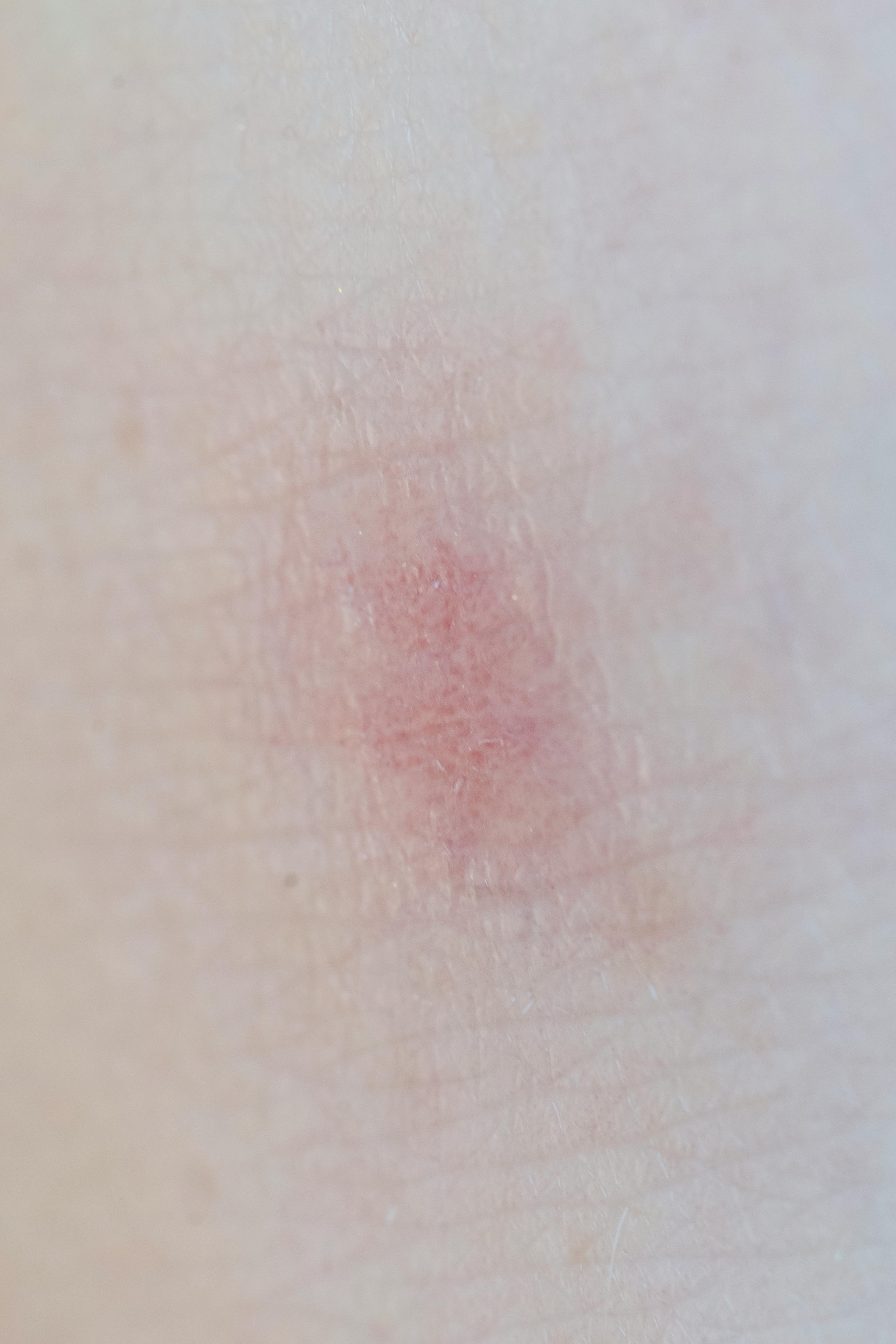
Atopic dermatitis affects approximately 16 million adults and 10 million children in the United States alone, with roughly 40 percent of those patients classified as having moderate-to-severe disease. The market has been transformed by Dupixent, which demonstrated that targeting the IL-4 and IL-13 pathway could produce durable, meaningful skin clearance in a population that had previously been managed primarily with topical steroids and systemic immunosuppressants. That transformation created a large, well-validated commercial opportunity, but it also created a high bar for any drug seeking to displace or complement the market leader.
The argument for zumilokibart is not that it will outperform Dupixent on every dimension. It is that a long-acting formulation enabling less frequent dosing addresses a real patient preference in a chronic disease where adherence over years of treatment matters enormously. BMO Capital Markets analyst Evan David Seigerman noted that zumilokibart could fill an important niche in the evolving atopic dermatitis landscape. That niche framing may undersell the opportunity if the Phase 3 data are strong, but it accurately captures the commercial logic: differentiation on convenience and tolerability in a market where the efficacy bar has already been set by a dominant incumbent.
What AbbVie Is Really Buying
The deeper significance of this deal is what it says about where immunology drug development is heading. The first generation of biologics for atopic dermatitis and related conditions established that targeting specific cytokine pathways could produce transformative outcomes. The second generation, which zumilokibart represents, is asking whether those outcomes can be delivered with better convenience, broader pathway coverage, and improved long-term tolerability. The combination strategies that Apogee has been building are a direct expression of that ambition.
AbbVie is not buying a finished product. It is buying a platform at the moment when the clinical evidence is compelling enough to justify the price but early enough that the full commercial potential has not yet been realized. The $1.3 billion financing package that Apogee had secured from Blackstone Life Sciences just weeks before the deal was reported suggests the company had the runway to develop zumilokibart independently. The fact that AbbVie moved anyway, at a 60 percent premium, reflects how competitive the market for late-stage immunology assets has become and how seriously the company is taking the need to build beyond its current franchise.
The atopic dermatitis market is large, growing, and increasingly sophisticated in how it evaluates new therapies. Whether zumilokibart earns its place in that market will depend on Phase 3 data that AbbVie will now be responsible for generating. The science is promising. The strategic logic is sound. The $10.9 billion question is whether the clinical execution matches the ambition.