One Vaccine Per Patient: What Merck and Moderna's Phase 3 Win Means for the Future of Cancer Treatment
Merck and Moderna's personalized mRNA cancer vaccine reduced recurrence risk by 42% in Phase 3 melanoma trial, marking the first regulatory-grade evidence that neoantigen therapy can outperform standard immunotherapy.


On October 24, 2026, in a packed auditorium in Madrid, the results of the INTerpath-001 trial were presented at the European Society for Medical Oncology Presidential Symposium. The room, by multiple accounts, was standing room only. The data had already leaked earlier in the week, which meant the audience knew the headline before the slides appeared. What they came to see was the detail, and the detail delivered.
Merck and Moderna's intismeran autogene, a personalized mRNA-based cancer vaccine, reduced the risk of recurrence or death by 42% compared to Keytruda alone in patients with completely resected stage IIB-IV melanoma. The hazard ratio was 0.58. The two-sided p-value was below 0.001. At 24 months, 82.2% of patients in the combination arm were recurrence-free, compared to 70.0% in the Keytruda-only arm. The risk of distant metastasis was reduced by 38%. These are not modest numbers. They are the kind of numbers that change how a disease is treated.
The trial enrolled 1,137 patients across multiple countries, randomized roughly two-to-one to intismeran plus pembrolizumab versus placebo plus pembrolizumab. The safety profile was consistent with prior experience. Grade 3 or higher adverse events occurred in 23.6% of the combination arm versus 20.3% in the control arm, a manageable difference for a regimen that adds a personalized vaccine to an already active immunotherapy backbone.
What Makes This Vaccine Different
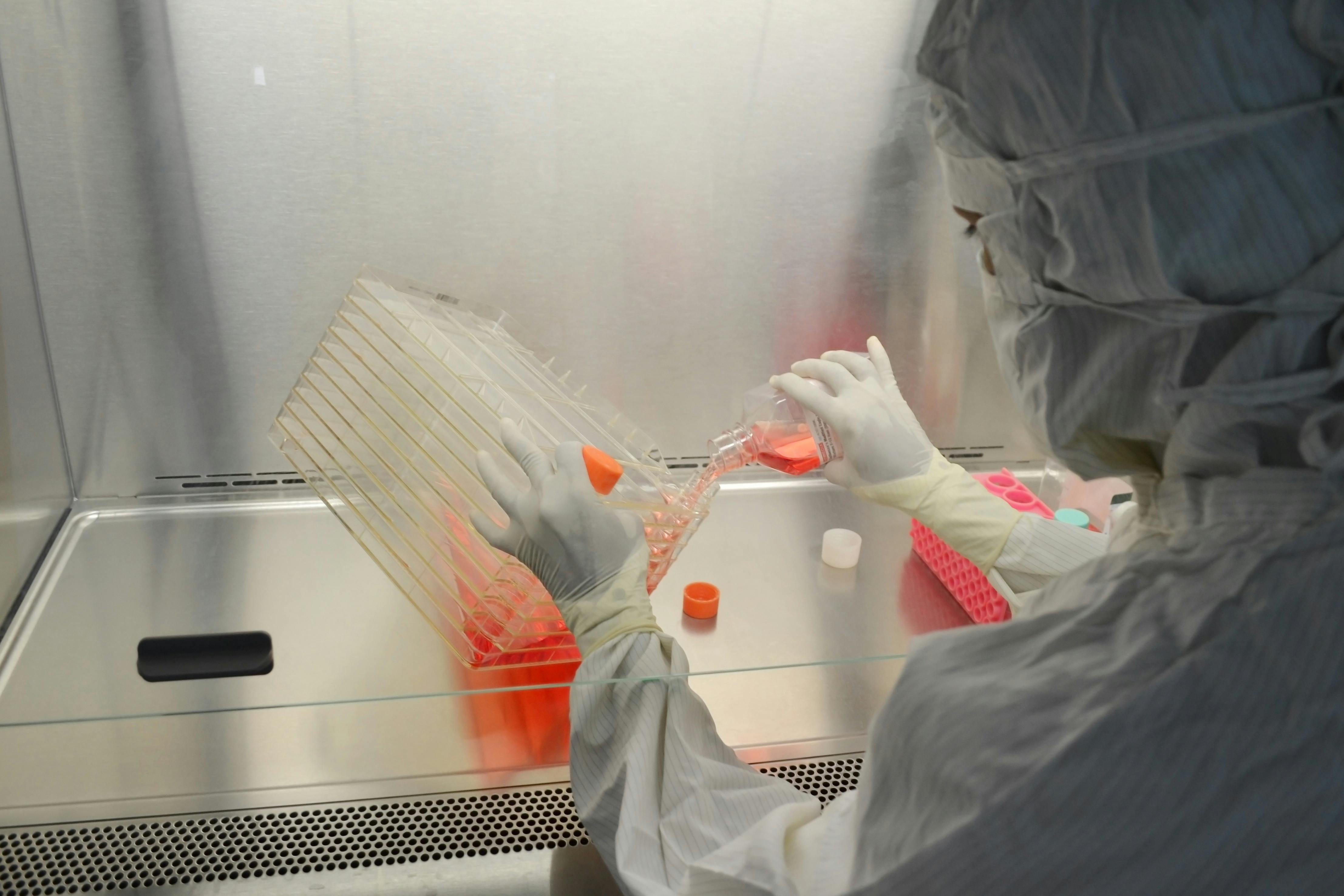
The word "vaccine" in the context of cancer treatment has been used so loosely for so long that it has lost some of its precision. Intismeran autogene is not a vaccine in the traditional sense of a fixed antigen preparation designed to prevent infection. It is a bespoke therapeutic, manufactured individually for each patient from a biopsy of their own tumor. The process begins with sequencing the tumor's DNA to identify mutations that are unique to that patient's cancer, mutations that the immune system has not yet learned to recognize. Those mutations are used to design synthetic mRNA sequences encoding up to 34 neoantigens, which are then formulated into lipid nanoparticles and administered as a series of injections over approximately nine weeks.
The result is a treatment that teaches the immune system to recognize the specific molecular fingerprint of a patient's cancer. When combined with pembrolizumab, which releases the brakes on T cells that tumors use to evade immune surveillance, the combination creates a two-pronged attack: the vaccine generates new T cells primed to recognize the tumor, and the checkpoint inhibitor keeps those T cells active. The INTerpath-001 data suggest that combination is meaningfully more effective than the checkpoint inhibitor alone, at least in the adjuvant melanoma setting.
This is the first Phase 3 trial to demonstrate that a personalized mRNA neoantigen therapy can improve outcomes over a standard-of-care immunotherapy. That distinction matters. The field has been building toward this result since Moderna and Merck first began collaborating in 2016, and since earlier Phase 2 data in melanoma suggested the approach was working. Phase 3 confirmation in a randomized, double-blind, placebo-controlled trial is a different category of evidence, and it is the category that regulatory agencies require before a treatment can be approved and broadly used.
The Context the Numbers Require
The market's reaction to the INTerpath-001 data was notably subdued. Moderna's stock fell slightly on the day of the presentation, and analysts described the results as coming in at the low end of investor expectations. That reaction deserves some unpacking, because it reflects a tension between what the data actually show and what the financial community had priced in.
The 42% reduction in recurrence risk is a large effect size by the standards of adjuvant oncology. Pembrolizumab alone, which is already an approved adjuvant treatment for resected high-risk melanoma, is an active comparator. Beating it by 42% in a randomized trial is not a modest achievement. The muted market response likely reflects a combination of factors: the data had already leaked, reducing the surprise element; the absolute recurrence-free survival rates, while meaningfully better, still leave a substantial fraction of patients experiencing recurrence; and the commercial path for a therapy that requires individualized manufacturing at scale is genuinely complex.
That manufacturing complexity is worth dwelling on. Each dose of intismeran autogene is unique to the patient who receives it. The process requires tumor sequencing, neoantigen selection, mRNA synthesis, and lipid nanoparticle formulation, all completed within a turnaround time that is clinically meaningful for patients who have just undergone surgery and are waiting to begin adjuvant treatment. Moderna has invested heavily in the manufacturing infrastructure required to deliver this at scale, but the logistics of personalized medicine at population scale remain a genuine operational challenge that no Phase 3 trial can fully resolve.
What Comes Next, and Why It Matters Beyond Melanoma
Merck and Moderna are currently running nine Phase 2 and Phase 3 trials of intismeran across multiple tumor types, including non-small cell lung cancer, bladder cancer, and renal cell carcinoma. The melanoma data provide the first Phase 3 anchor for the program, but the more consequential question is whether the approach generalizes. Melanoma is a highly immunogenic tumor type, characterized by a high mutational burden that gives the immune system a great deal to work with. Whether the same personalized vaccine strategy produces comparable results in tumor types with lower mutational burden, or in settings where the immune microenvironment is less permissive, is a question the ongoing trials will answer over the next several years.
The INTerpath-001 result also arrives at a moment when the broader mRNA cancer vaccine field is navigating a meaningful fork in the road. BioNTech's fixed antigen mRNA vaccine BNT113 recently failed to improve progression-free survival in HPV-positive head and neck cancer, raising questions about whether the fixed antigen approach can compete in settings where the control arm is already immunologically active. The Merck and Moderna data suggest that the personalized approach, which tailors the vaccine to each patient's unique tumor mutations rather than targeting a shared antigen, may have a more durable path forward. The two approaches are not directly comparable, but the contrast between a Phase 3 win and a Phase 3 miss in the same broad technology class will shape how the field allocates capital and clinical resources going forward.
For patients with resected high-risk melanoma, the INTerpath-001 result represents a concrete advance in what adjuvant treatment can offer. The prospect of a personalized vaccine that reduces the risk of the cancer returning by more than 40%, on top of an already active immunotherapy, is a meaningful improvement over the current standard of care. The regulatory path forward will require engagement with the FDA and other agencies, and the manufacturing and access questions will take time to resolve. But the scientific question at the center of the program, whether a vaccine built from a patient's own tumor mutations can teach the immune system to keep that cancer from coming back, now has a Phase 3 answer. The answer is yes.