Alpha Strikes Back: What RYZ101's Phase 3 Win Means for the Future of Radiopharmaceutical Therapy
Bristol Myers Squibb's RYZ101 becomes the first alpha-emitting radiopharmaceutical to succeed in a Phase 3 trial. What the ACTION-1 result means for the future of targeted radiation therapy in GEP-NETs and beyond.

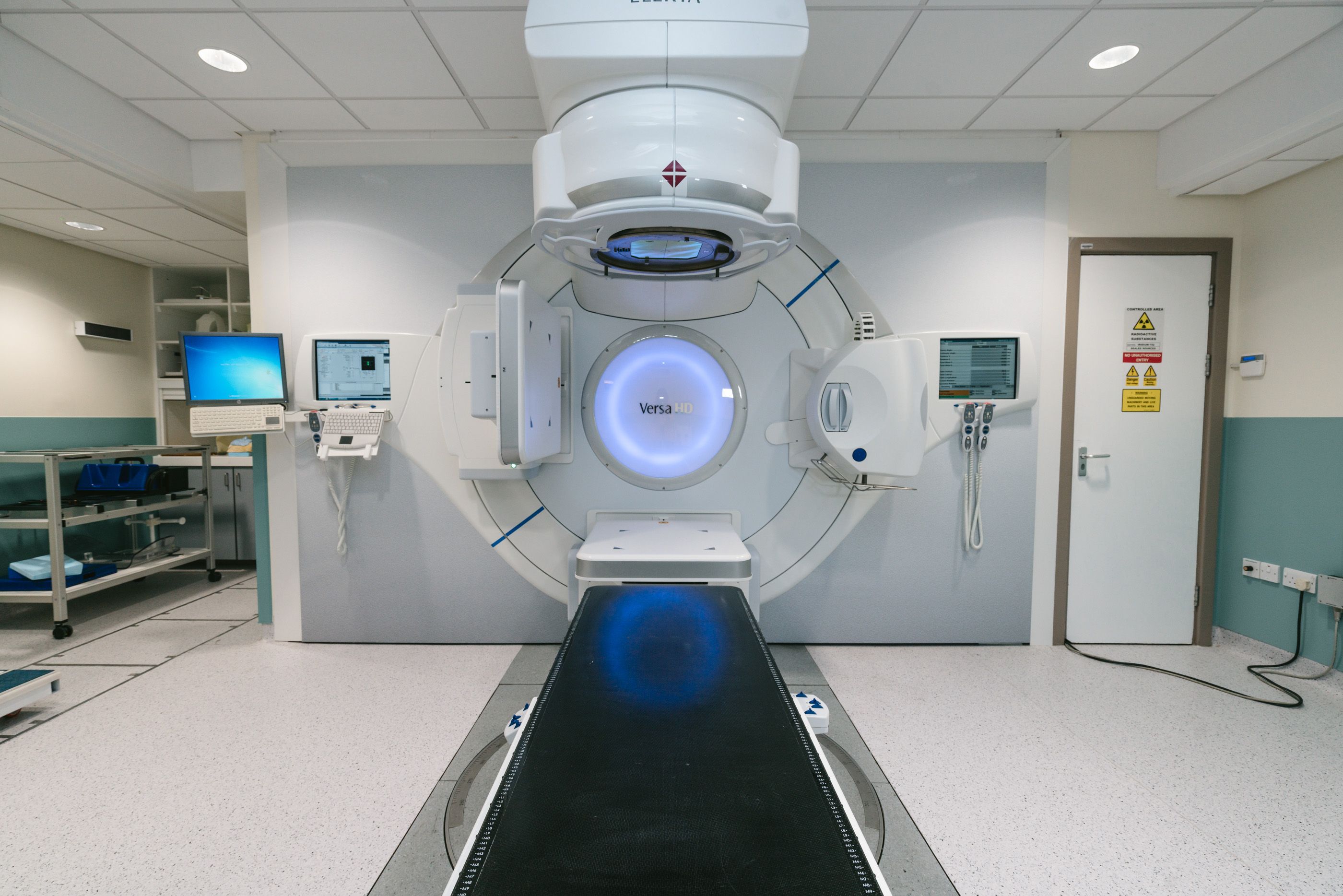
There is a particular kind of clinical trial result that does more than validate a single drug. It validates a field. On October 12, 2026, Bristol Myers Squibb announced that RYZ101, the actinium-225-based radiopharmaceutical developed by its RayzeBio subsidiary, had met the primary endpoint of the Phase 3 ACTION-1 trial in patients with somatostatin receptor-positive gastroenteropancreatic neuroendocrine tumors who had progressed following lutetium-177-based therapy. The study showed a statistically significant and clinically meaningful improvement in progression-free survival by blinded independent central review. The safety profile was consistent with prior experience. And buried in the press release, almost as an aside, was a sentence that deserves considerably more attention than it received: these are the first results from a Phase 3 trial of an alpha-isotope based targeted radiopharmaceutical therapy using actinium-225 in any indication.
That is not a minor footnote. It is a milestone for an entire therapeutic modality.
The Difference Between Alpha and Beta
To understand why the ACTION-1 result matters beyond the GEP-NET indication, it helps to understand what distinguishes alpha-emitting radiopharmaceuticals from the beta-emitting agents that currently dominate the field. Lutetium-177, the isotope at the heart of Novartis's Lutathera and the standard of care that RYZ101 was designed to follow, is a beta emitter. Beta particles travel several millimeters in tissue, depositing radiation across a relatively wide radius. That range is useful for treating tumors with heterogeneous receptor expression, where not every cell needs to be directly targeted for the radiation to reach it. But it also means that surrounding healthy tissue absorbs a meaningful dose, which constrains how aggressively the therapy can be dosed.
Actinium-225 is an alpha emitter. Alpha particles travel only a fraction of a millimeter in tissue, roughly two to three cell diameters, but they deposit energy at a density roughly 400 times greater than beta particles over that short range. The result is a highly localized, intensely cytotoxic effect that causes double-stranded DNA breaks in targeted cells while largely sparing adjacent tissue. In theory, this makes alpha-emitting radiopharmaceuticals more potent per targeted cell and potentially safer for surrounding structures. In practice, the challenge has been manufacturing actinium-225 at scale, a supply constraint that has slowed the field for years and that BMS has invested heavily to address through RayzeBio's isotope production infrastructure.
What ACTION-1 Actually Tested
The trial enrolled patients with SSTR-positive GEP-NETs whose disease had progressed after prior lutetium-177-based therapy, a population with genuinely limited options. The comparator arm was investigator's choice of standard of care, including high-dose or high-frequency long-acting somatostatin analogues, everolimus, or sunitinib. None of those options has demonstrated compelling efficacy in the post-Lu177 setting, which is precisely why the FDA granted RYZ101 Orphan Drug Designation in August 2026 based on the significant unmet need.
The Phase 1b data that preceded ACTION-1 were encouraging but limited to 17 patients. In that cohort, RYZ101 produced a confirmed objective response rate of 35 percent, with a median progression-free survival that was not yet estimable at the data cutoff. No treatment-related serious adverse events were observed, and no patients discontinued due to adverse events. Those numbers justified the Phase 3 investment, but they could not confirm it. ACTION-1 does that. A statistically significant PFS improvement in a randomized trial, against an active comparator, in a rare tumor type where no prior Phase 3 evidence existed for any post-Lu177 treatment, is a meaningful clinical achievement.
The Broader Implications for Radiopharmaceutical Development
The ACTION-1 result arrives at a moment when the radiopharmaceutical sector is navigating a complicated transition. Novartis's Lutathera established lutetium-177 DOTATATE as a standard of care in GEP-NETs in 2018, and the subsequent approval of Pluvicto for prostate cancer in 2022 demonstrated that the targeted radiopharmaceutical model could scale commercially. Those two approvals triggered a wave of investment in the space, with dozens of programs entering development across multiple tumor types and isotopes. But the field has also encountered real headwinds. Supply chain constraints for both lutetium-177 and actinium-225 have limited patient access. Manufacturing complexity has challenged smaller developers. And the clinical differentiation between competing programs has been difficult to establish in the absence of head-to-head data.
Against that backdrop, the ACTION-1 result does several things simultaneously. It establishes that alpha-emitting radiopharmaceuticals can produce Phase 3-level evidence of efficacy, answering a question that the field has been building toward for years. It validates the post-Lu177 GEP-NET setting as a tractable clinical target, which has implications for other programs pursuing similar patient populations. And it gives BMS a regulatory pathway to pursue for RYZ101, with the company indicating it will engage with the FDA to discuss next steps toward a submission.
The Acquisition That Made This Possible
The RYZ101 story is also a case study in how large pharmaceutical acquisitions play out over time. BMS acquired RayzeBio in a deal that closed in early 2024 for approximately 4.1 billion dollars, at a time when the radiopharmaceutical space was attracting significant strategic interest from major companies. The acquisition gave BMS not just RYZ101 but an entire platform spanning isotope production, manufacturing, and a pipeline of programs targeting GPC3, ACP3, and next-generation SSTR2-directed therapies. The ACTION-1 result is the first Phase 3 validation of that platform, and it arrives at a moment when BMS needs positive clinical news across its portfolio.
The company reported the RYZ101 win on the same day it disclosed mixed results for admilparant, its LPA1 receptor antagonist in idiopathic pulmonary fibrosis, where only the lower of two tested doses met the primary endpoint. The contrast between the two readouts illustrates the portfolio logic that drives large-scale acquisitions in oncology: diversification across mechanisms and modalities provides a buffer against the inevitable failures that characterize drug development at scale.
What Comes Next
The topline announcement does not include the magnitude of the PFS benefit, the hazard ratio, or the safety data in detail. Those numbers will be presented at a future medical meeting, and they will matter considerably for how the field interprets the result. A modest PFS improvement in a rare tumor type is a different story from a large one, and the regulatory path for RYZ101 will depend on the totality of the data rather than the topline headline.
What the ACTION-1 result establishes today is that actinium-225-based targeted radiopharmaceutical therapy works in a randomized Phase 3 setting. That is a proof of concept for the alpha-emitting modality that no prior trial could provide. For the roughly 18,000 patients diagnosed annually with GEP-NETs in the United States, many of whom will eventually progress after lutetium-177 therapy, the prospect of a new treatment option built on a more potent isotope is a concrete clinical development. For the broader radiopharmaceutical field, it is a signal that the next generation of targeted radiation therapy is no longer theoretical. It has Phase 3 data behind it.