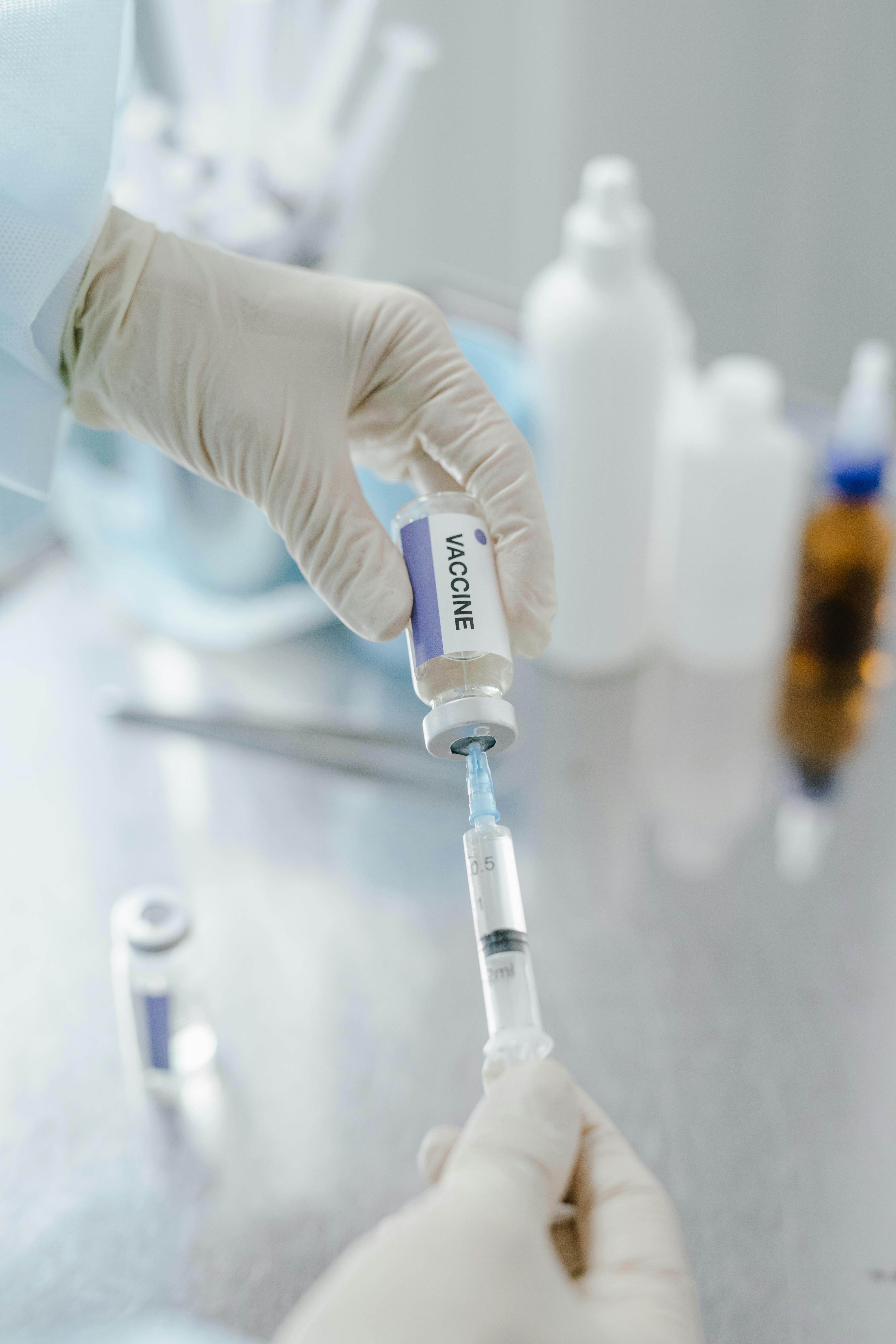
Alpha Tau’s Radiation Therapy Shows it Could Treat Pancreatic Cancer While Preserving the Immune System

New ASCO data from Alpha Tau Medical (NASDAQ: DRTS) shows immune markers remain stable after treatment, a finding that could open the door to combination therapies in one of oncology's deadliest cancers.
Pancreatic cancer is the third leading cause of cancer death in the United States. It kills more than 50,000 Americans annually, and the five-year survival rate has stagnated at around 13%. For patients with pancreatic adenocarcinoma, the most common form, survival rates are even lower. The majority of patients are already inoperable by the time of diagnosis, limiting treatment options. It is, by nearly every measure, one of the hardest problems in oncology.
One reason pancreatic cancer is so difficult to treat is that conventional external-beam radiation therapy can be associated with systemic immune suppression, including radiation-induced lymphopenia. That matters because immunotherapy drugs, which have transformed outcomes in other cancers, rely on a functioning immune system to work. If radiation weakens the very defenses those drugs depend on, combining the two becomes problematic.
New data from Alpha Tau Medical (NASDAQ: DRTS), set to be presented at the 2026 ASCO Gastrointestinal Cancers Symposium, suggests its Alpha DaRT therapy may sidestep this problem. In a cohort of pancreatic cancer patients treated in Montreal, several systemic immune markers showed no significant deterioration one month after treatment. By contrast, these markers often worsen following conventional radiation and have been correlated in prior studies with poorer outcomes.
What the Data Shows
Across 32 patients in the first-in-human trial in Montreal, Alpha DaRT achieved an 81% disease control rate, meaning tumors either stopped growing or shrank, including a 22% objective response rate (ORR). When excluding two patients who were deliberately given sub-therapeutic doses for initial safety testing, the disease control rate increased to 87%, with a 23% ORR.
The immune findings may be the more consequential headline. Investigators evaluated systemic immune markers in 23 patients with complete laboratory data, including ratios that reflect immune cell balance and inflammation. These markers — including NLR, PLR, CD4/CD8 ratio, and CRP — showed no significant change one month after treatment. The data also demonstrated a statistically significant reduction in IL-6, a protein associated with inflammation, suggesting a potential reduction in treatment-related inflammatory response.
Dr. Kim Anh Ma, Assistant Professor of Oncology at Jewish General Hospital in Montreal, noted in the conference materials that identifying a radiation therapy without increased negative prognostic immune factors is “quite unique.” This could be meaningful because an intact immune system is essential for immunotherapy drugs to work. If Alpha DaRT preserves immune function, it may be particularly well suited for combination with checkpoint inhibitors, a class of drugs that has reshaped cancer treatment over the past decade.
How Alpha DaRT Works
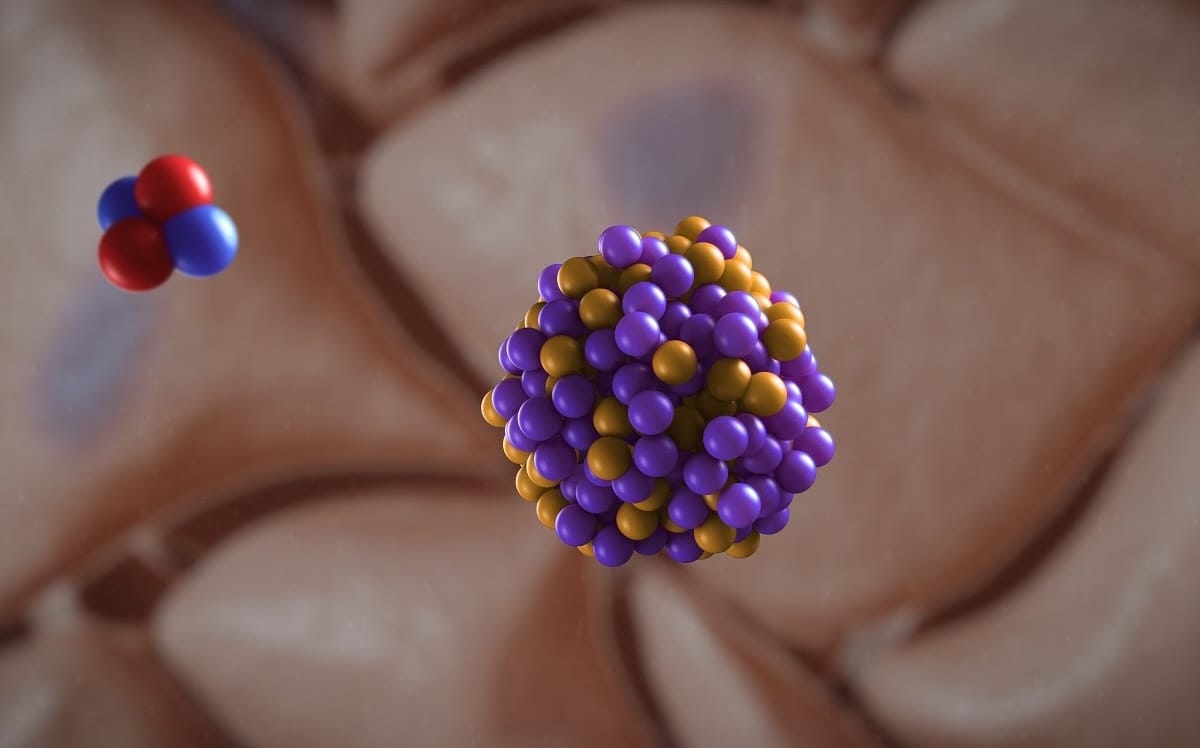
Alpha DaRT works by inserting tiny radium-224 sources directly into tumors. As the radium decays, it releases a cascade of short-lived daughter isotopes that emit high-energy alpha particles. These particles travel only a few millimeters before depositing their energy, destroying cancer cells while largely sparing surrounding healthy tissue.
This localized approach stands in contrast to external-beam radiation, which must pass through healthy tissue to reach the tumor, and to systemic radiopharmaceuticals, which circulate throughout the body. For pancreatic adenocarcinoma — located deep in the abdomen and surrounded by sensitive organs — the appeal of highly contained radiation delivery is clear.
The treatment is delivered via endoscopic ultrasound, a minimally invasive procedure that allows physicians to access the pancreas without major surgery.
How the Alpha DaRT works
A Growing U.S. Presence
Alpha Tau is not stopping at first-in-human studies. In September 2025, the company treated its first patient in the IMPACT trial, a U.S. multi-center study evaluating Alpha DaRT in combination with chemotherapy in newly diagnosed pancreatic cancer patients. The trial is designed to enroll approximately 30 patients across two cohorts: those with locally advanced disease and those with metastatic disease.
The company has also expanded its manufacturing infrastructure. In October 2025, Alpha Tau secured a radioactive material license for its New Hampshire facility. The first phase is designed, based on company estimates, to support production of approximately 400,000 Alpha DaRT sources annually for domestic use.
Beyond pancreatic cancer, the company is advancing multiple additional clinical programs in the United States. Its ReSTART trial in recurrent skin cancer is one of five FDA-authorized clinical trials currently underway. On January 5, Alpha Tau announced submission of the first module of its pre-market approval (PMA) application to the FDA for this indication, a key regulatory milestone toward potential U.S. commercialization. The company has also previously disclosed submissions related to potential marketing authorization in Japan.
Context: A Hot Sector
The radiotherapeutics space has seen extraordinary deal activity in recent years. Bristol Myers Squibb paid $4.1 billion for RayzeBio. AstraZeneca agreed to acquire Fusion Pharmaceuticals in a transaction valued at approximately $2 billion. Novartis has invested billions across multiple acquisitions, with its Pluvicto therapy generating over $1 billion annually. The common thread is clear: large pharmaceutical companies are racing to acquire platforms that can deliver radiation directly to tumors with greater precision.
Alpha Tau remains a clinical-stage company, with all the risks that entails. But it holds a differentiated technology, multiple shots on goal across indications, and emerging data suggesting its approach may preserve immune function that conventional radiation modalities can compromise.
What Comes Next
The ASCO GI presentation in early January will put Alpha Tau’s pancreatic cancer data in front of leading oncologists and researchers. In an era where combination regimens increasingly define treatment success, evidence that a radiation platform can coexist with — rather than undermine — immune-based therapies could attract meaningful interest.
Whether that translates into partnerships, expanded trials, or eventual commercial success remains to be seen. But for a company presenting data that challenges long-held assumptions about radiation and immunity, the setup appears notable.
Read this next >> Big Pharma’s GLP-1 Delivery Race May Highlight Opportunities Below the Surface
Recent news highlights from Alpha Tau
Important Disclaimers and Disclosures: The author, Wall Street Wire, is a content and media technology platform that connects the market with under-the-radar companies. The platform operates a network of industry-focused media channels spanning finance, biopharma, cyber, AI, and additional sectors, delivering insights on both broader market developments and emerging or overlooked companies. The content above is a form of paid promotional content and advertising. Wall Street Wire receives cash compensation from Oramed Pharmaceuticals Inc for promotional media services provided on an ongoing subscription basis to to Alpha Tau Medical Ltd. This content is for informational purposes only and does not constitute financial or investment advice. Wall Street Wire is not a broker-dealer or investment adviser. Full compensation details, information about the operator of Wall Street Wire, and the complete set of disclaimers and disclosures applicable to this content are available at: http://wallstwire.ai/disclosures. Market size figures or other estimates referenced in this article are quoted from publicly available sources; we do not independently verify or endorse them, and additional figures or estimates may exist. This article should not be considered an official communication of the issuer.